When you buy jewelry, utensils, gifts or decorative items you may see the terms silver and German silver. Both can be bright and silver in color, but are very different metals.
The biggest difference is simple: real silver contains silver, whereas German silver normally contains no silver at all. German silver is a metal alloy whose main components are copper, nickel and zinc. It is also known as nickel silver. The name is misleading and it looks like silver but it is not the same precious metal.
Explain the difference between silver and German silver in simple words.
Silver Vs German Silver – Quick Comparison
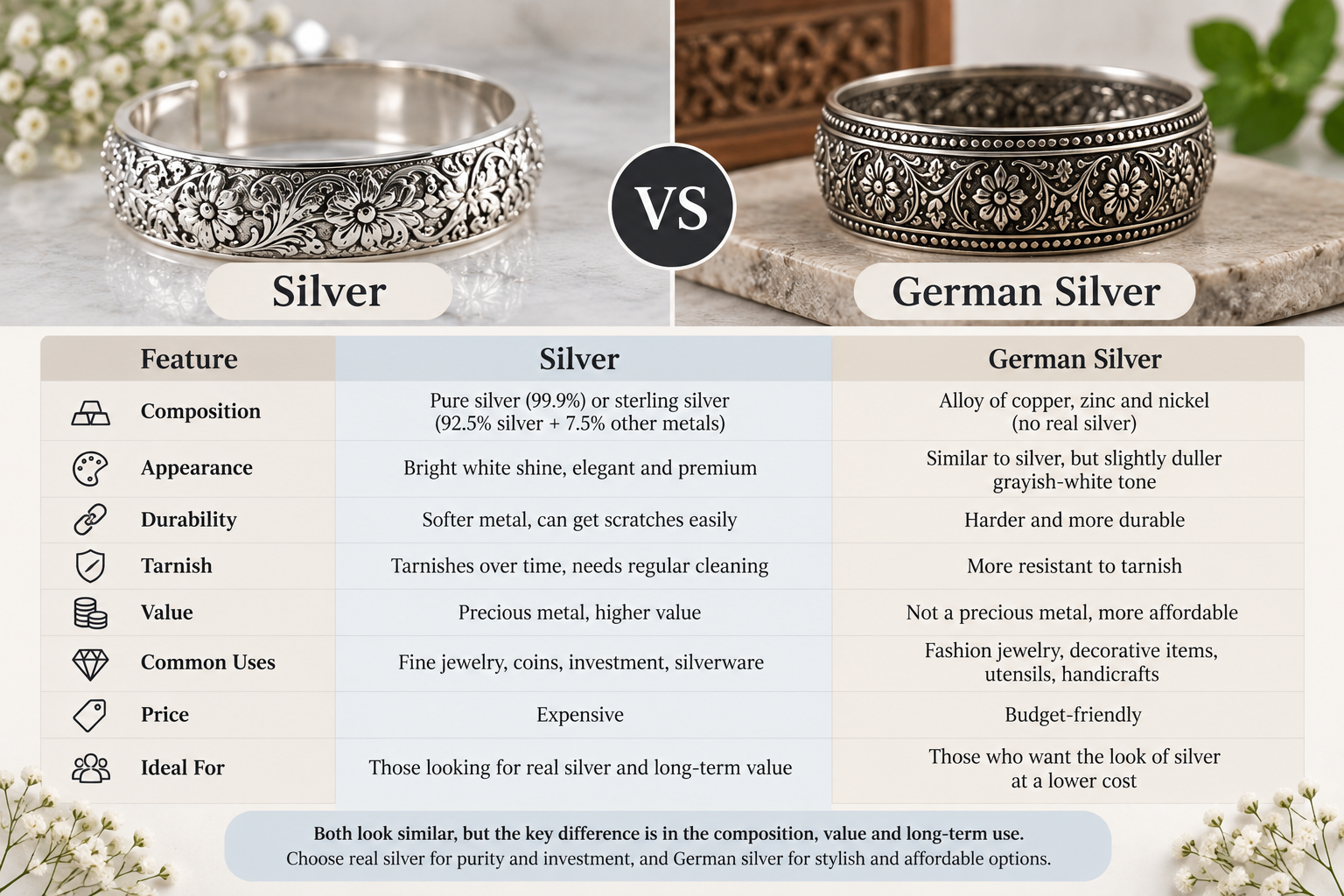
| Features | Silver | Nickel Silver |
| Real silver content | Yes | Usually no silver |
| Standard material | Silver or silver alloy | Copper, zinc and nickel |
| Precious Metal | Yes | No |
| Visual Appearance | Natural silver color | Silver color |
| Value | Partly derived from silver content | mainly by material and design |
| Price | Typically higher | Typically lower |
| common type of jewelry | Fine jewelry | Fashion or imitation jewelry |
| Purity marking | May contain a silver purity mark | Should not be taken as a silver purity mark |
| Main benefit | Genuine silver material | Silver look alike at low cost |
What Is Silver?
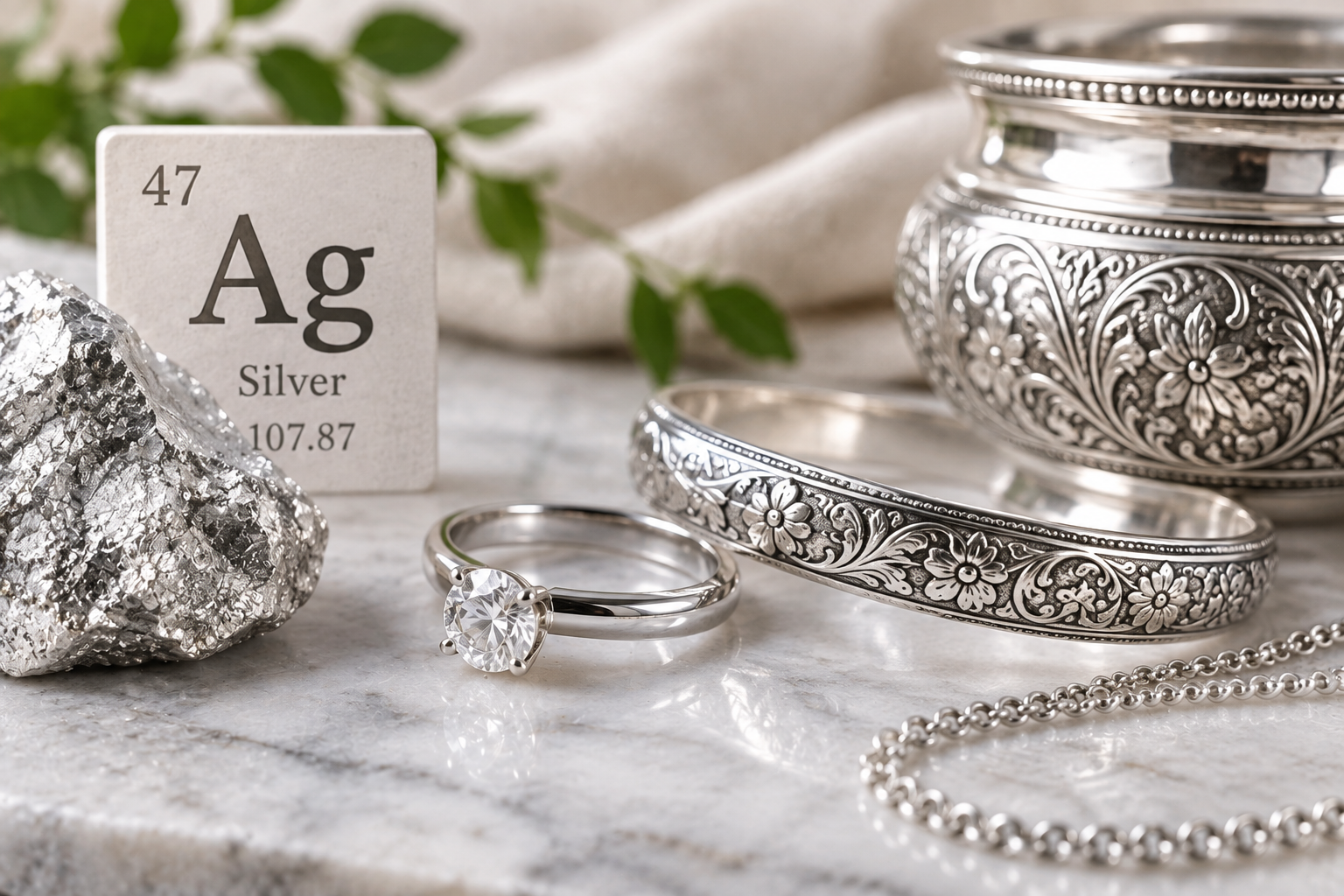
Silver is a naturally occurring precious metal used to manufacture jewelry, coins, decorative items and many other products.
When talking about jewelry you will often hear about 925 silver or sterling silver. This means that the material is very silvered. In BIS standards, there are several grades of silver fineness in India, like 925, 970, 990, etc.
Silver has a natural luster and can be polished to a beautiful shine. However, silver jewelry can tarnish over time because silver alloys are reactive with substances in the air.
For men looking for a stylish everyday jewelry option, you can also explore Men’s Silver Bracelet for different designs and styles.
Main features of silver are:
- It has real silver in it.
- 925 silver is 92.5% silver.
- It is a valuable metal.
- It has value for its silver content.
- Rings, earrings, chains, bracelets and other jewelry is very common.
- It can tarnish and needs to be cleaned regularly.
What is a German silver?
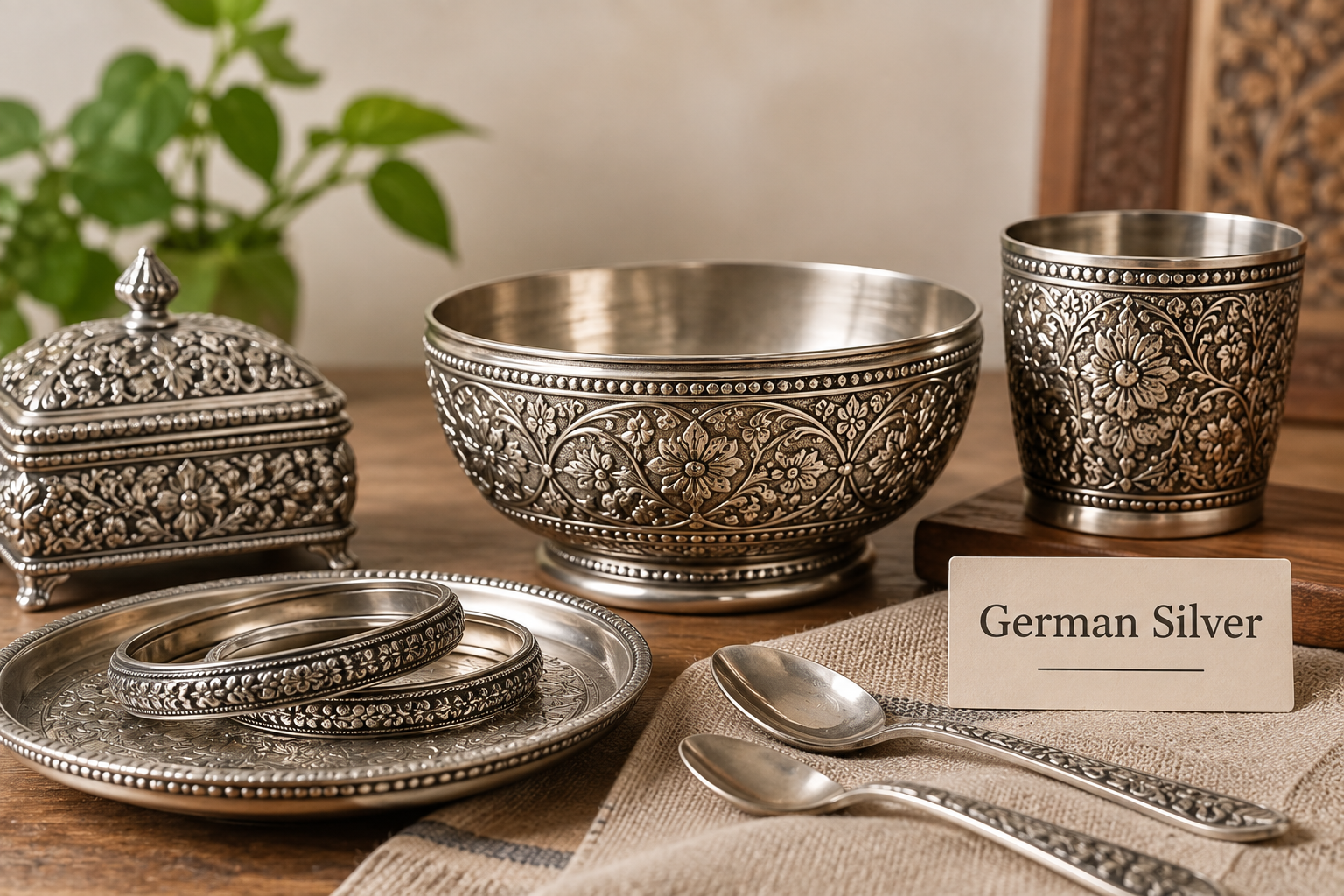
German silver is an alloy that resembles silver. It is also called nickel silver.
German silver, despite the name, contains no silver. It is usually composed of copper, nickel and zinc. It was called German silver because of its silver-white appearance. The exact composition can be different depending on the alloy.
German silver is often used for decorative goods, imitation jewelry, handicrafts, utensils and other articles where the appearance of silver is desired without using the precious metal.
Characteristics of German Silver
- Usually no silver.
- It’s mostly made up of copper, nickel and zinc.
- It has a silvery appearance.
- Costs a lot less than real silver generally.
- For fashion and decorative jewelry products.
- The name sometimes confuses buyers.
Silver versus German Silver – Quick Comparison
Silver vs. German Silver: What’s the Difference?
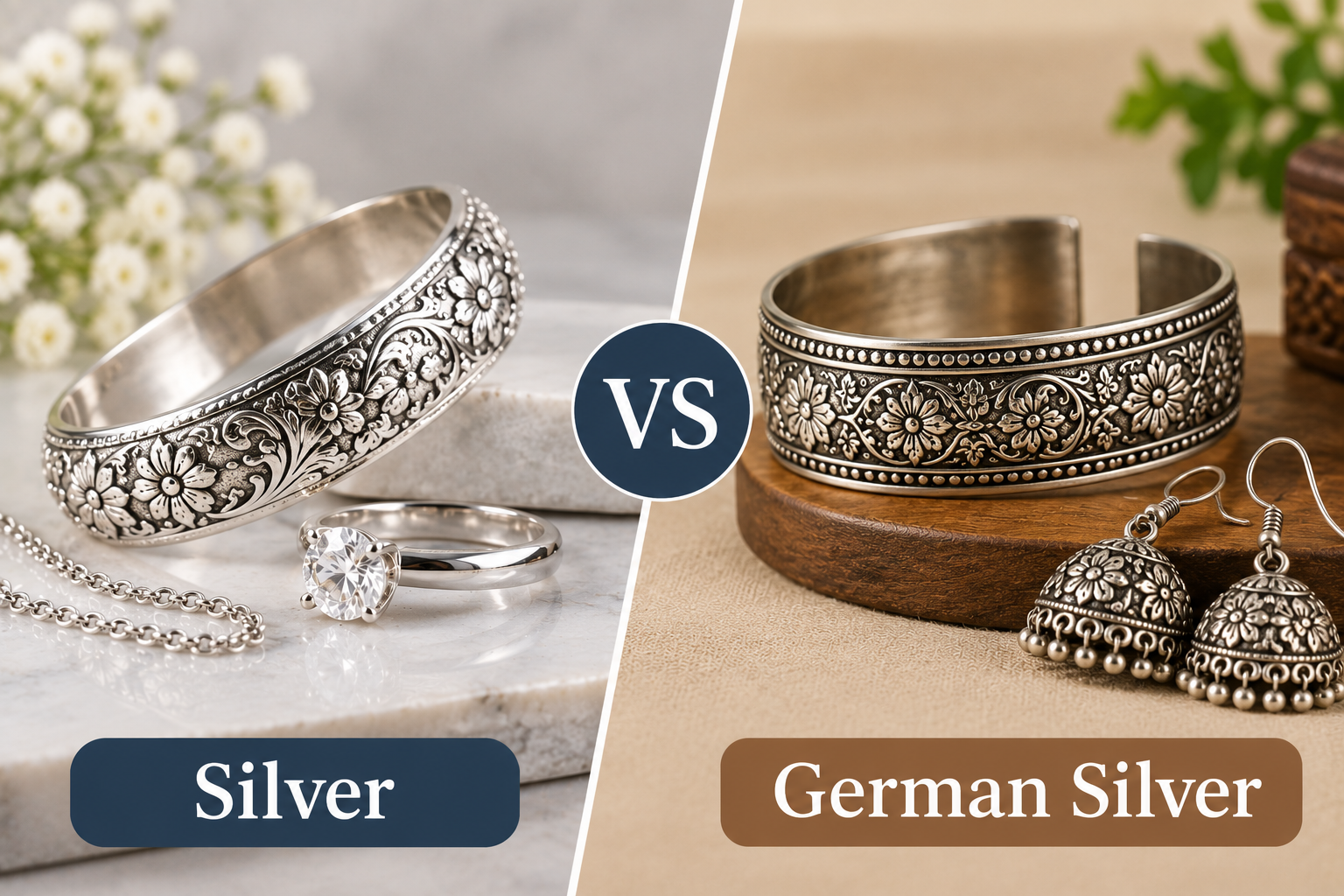
The biggest difference is the material the product is actually made out of.
If a thing be in truth silver it has silver; Another alloy that just looks like silver is German silver.
For example, an article marked as 925 silver is supposed to signify a silver fineness of 925 parts per thousand under the applicable BIS silver standard in India. BIS accepts 925 as a recognized grade of silver fineness.
German silver will not become real silver just because it has a bright white color or the words “German silver” on the product description.
That is why it is important to check the product details before purchasing jewelry.
Price Variation
The price of silver and German silver can vary a lot.
Real silver has a precious-metal value. The price can be affected by the price of silver in the market, purity, weight, design, making charges and other costs.
German silver does not have the same precious-metal value as it does not contain silver. It is often used when someone wants the look of silver but at a lower material cost.
That’s why German silver is used in inexpensive fashion jewelry and decorative items.
Is German Silver Genuine Silver?
No. That’s one of the most important things to remember.
German silver is not actually silver.
It is a base-metal alloy with a silver color. The Canadian Conservation Institute describes nickel silver (also known as German silver) as an alloy of copper, zinc and nickel that contains no silver.
So, if you are looking for real silver jewelry never assume that a product is silver just because the seller calls it German silver.
For those who prefer bold and distinctive jewelry styles, you can also explore Hip Hop Jewelry for different designs and options.
What is best for jewelry?
Depends on what you want.
Silver may work for you if:
- You want real silver jewelry.
- You want the silver to be pure and to have a high silver content.
- You want a product in precious metals.
- You’re buying jewelry as a long term piece.
- You want to check a known silver fineness.
When you need German silver, it may be just what you need:
- What you need is a cheap fashion accessory.
- You care about design and looks mainly.
- You want a silver look on a lower material cost.
- You are buying fancy dress or costume jewelry.
The two materials need not be considered as the same product. It is important to know exactly what you are buying.
How to Test Silver Before Purchase
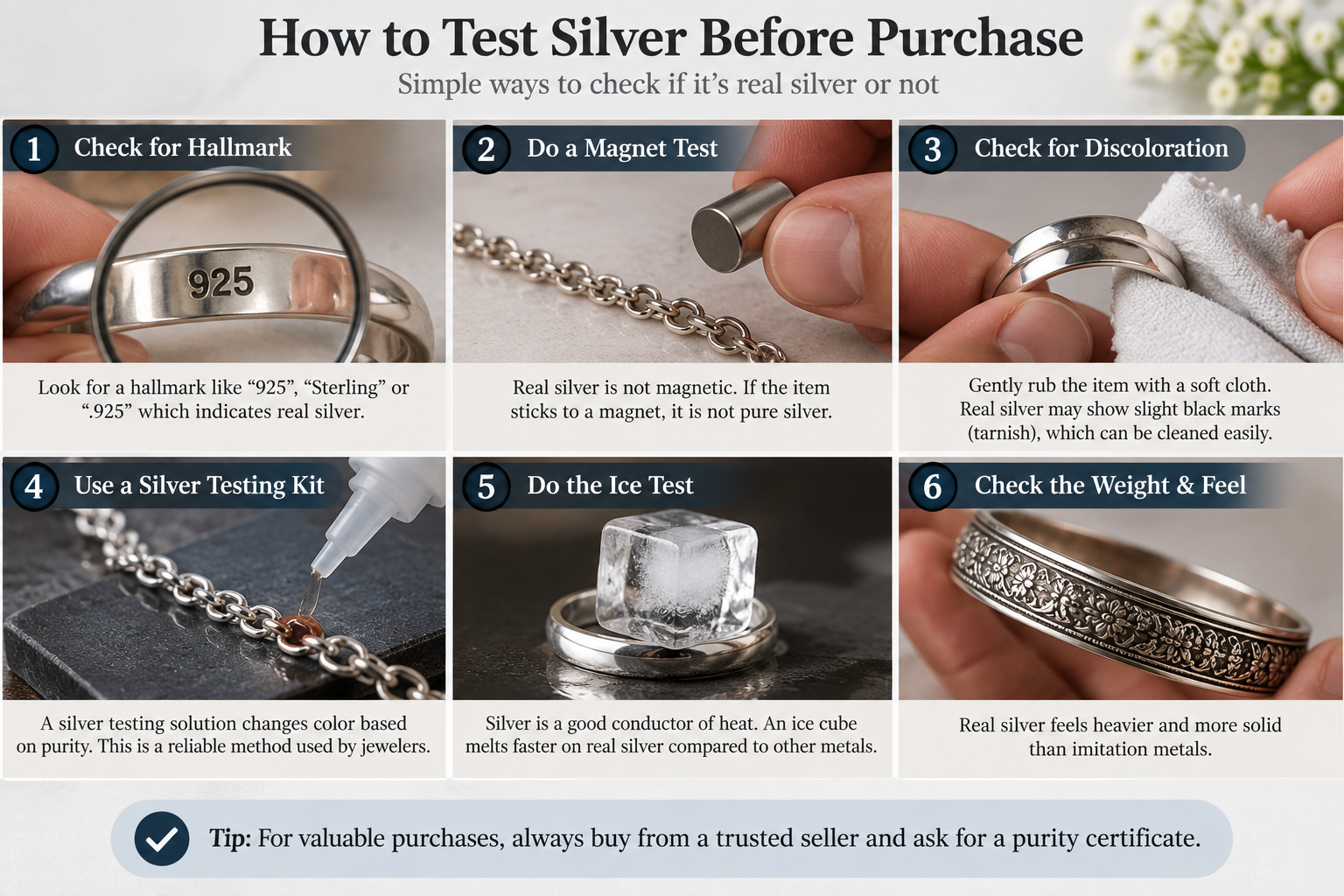
Buy from a reliable seller and look for clear purity information when buying silver jewelry in India.
BIS says hallmarking provides third-party assurance of declared precious-metal purity. BIS under its relevant standard for hall marked silver articles recognizes the grades of fineness of silver.
Check before you buy:
- The fineness of silver
- Hallmark information, if applicable
- Weight of product
- Bringing charges
- Details of stone or gem stone
- Return & exchange policy
- Seller’s information
- Correct invoice/bill
BIS also advises consumers to obtain an authentic bill or invoice for hallmarked jewelry.
Closing Thoughts
Silver and German silver differ chiefly in the matter of substance.
Silver is a precious metal that has real silver in it. German silver is an alloy of copper, nickel and zinc, and generally contains no silver.
German silver or nickel silver is a good choice for cheap fashion jewelry and ornamental items as it looks like silver. When the buyer desires a precious metal with a known silver fineness, real silver is used.
Always read the product description carefully before buying Don’t judge silver by its color or appearance alone. Check the purity, hallmark, weight, price and invoice.
This small test will help you to know that whether you are buying real silver or German silver.