
What Are Mehndi Designs?
Mehndi is the art of drawing temporary patterns on skin using henna paste. Practised across South Asia and the Middle East for centuries, it remains one of the most popular ways to celebrate weddings, festivals, and special occasions in India and Pakistan.
Whether you are a bride looking for full-hand bridal mehndi, someone who prefers simple Arabic patterns, or a beginner trying mehndi for the first time, the right design depends on your occasion, skill level, and personal taste. This guide walks you through every major style, helps you pick the right one, and covers practical tips on application and aftercare.
Types of Mehndi Designs
Mehndi styles have evolved differently across regions. Each type has distinct patterns, spacing, and coverage. Here are the main types you will come across.
Indian Mehndi Designs
Indian mehndi is known for dense, detailed patterns that cover most of the palm and extend to the wrist or forearm. Traditional Indian designs feature peacocks, paisleys, lotus flowers, the kalash (sacred pot), elephants, and bride-groom figures.
These designs leave very little empty space on the skin. They are most popular for weddings and major festivals like Karva Chauth and Diwali. Regional variations include Marwari and Rajasthani mehndi, which uses fine lines and fills the entire hand with intricate detail.
Indian mehndi suits brides, wedding guests, and anyone who wants bold, traditional patterns.
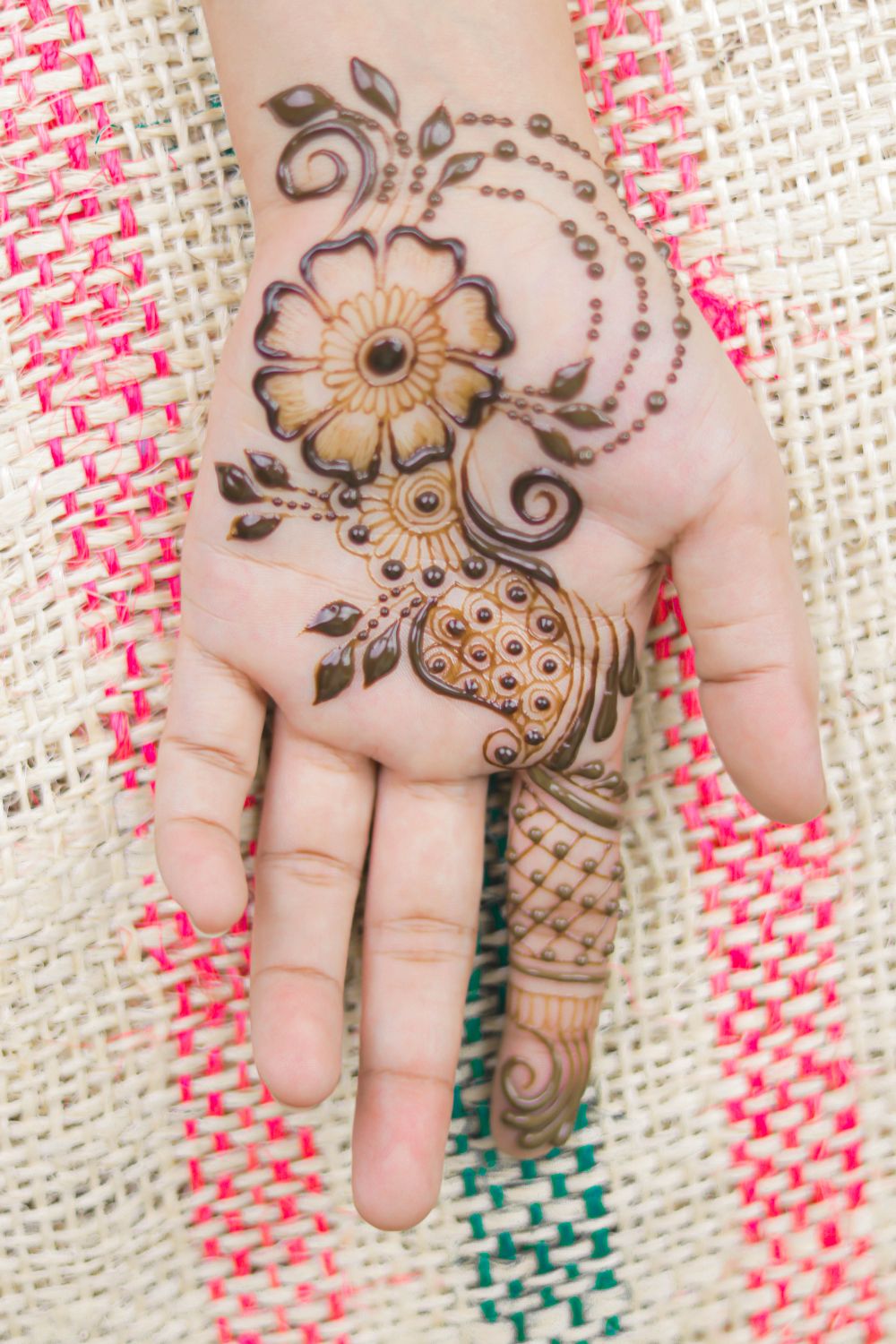
Arabic Mehndi Designs
Arabic mehndi uses flowing, spread-out patterns with generous spacing between elements. The hallmarks are bold outlines, shaded leaves, cashew (paisley) motifs, and floral trails that run diagonally across the palm.
Unlike Indian mehndi, Arabic designs intentionally leave portions of skin visible, which creates an elegant contrast. They are quicker to apply and work well for both hands and feet.
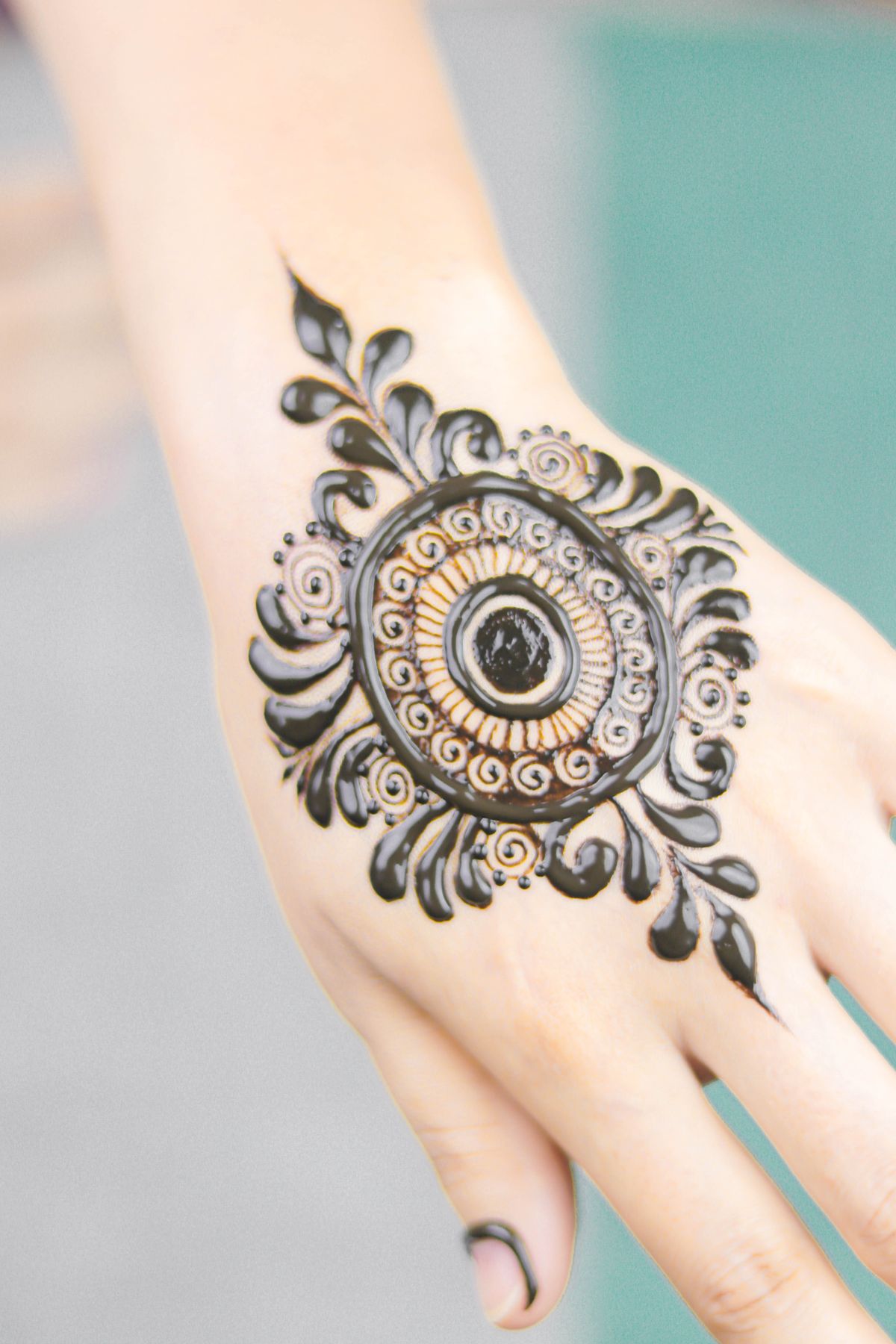
If you are looking for designs that are stylish but not too heavy, check our easy Arabic mehndi designs collection for inspiration.
Pakistani Mehndi Designs
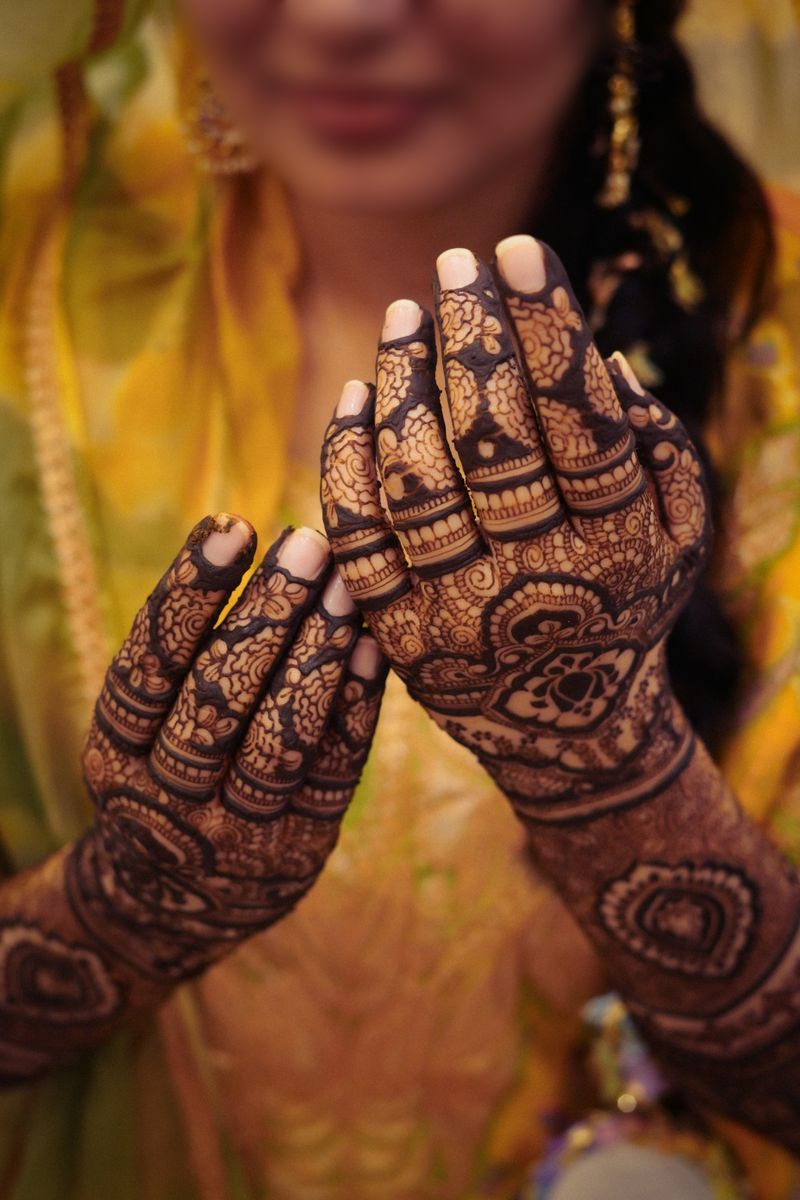
Pakistani mehndi blends Indian density with Arabic flow. These designs often feature dome shapes, floral clusters, and elaborate leaf patterns. They tend to cover the full hand and extend well past the wrist.
The Pakistani mehndi designs tradition is especially strong during Eid and wedding celebrations. Many Pakistani designs also incorporate Arabic elements, creating a fusion style that is popular across South Asia.
Indo-Arabic Mehndi Designs
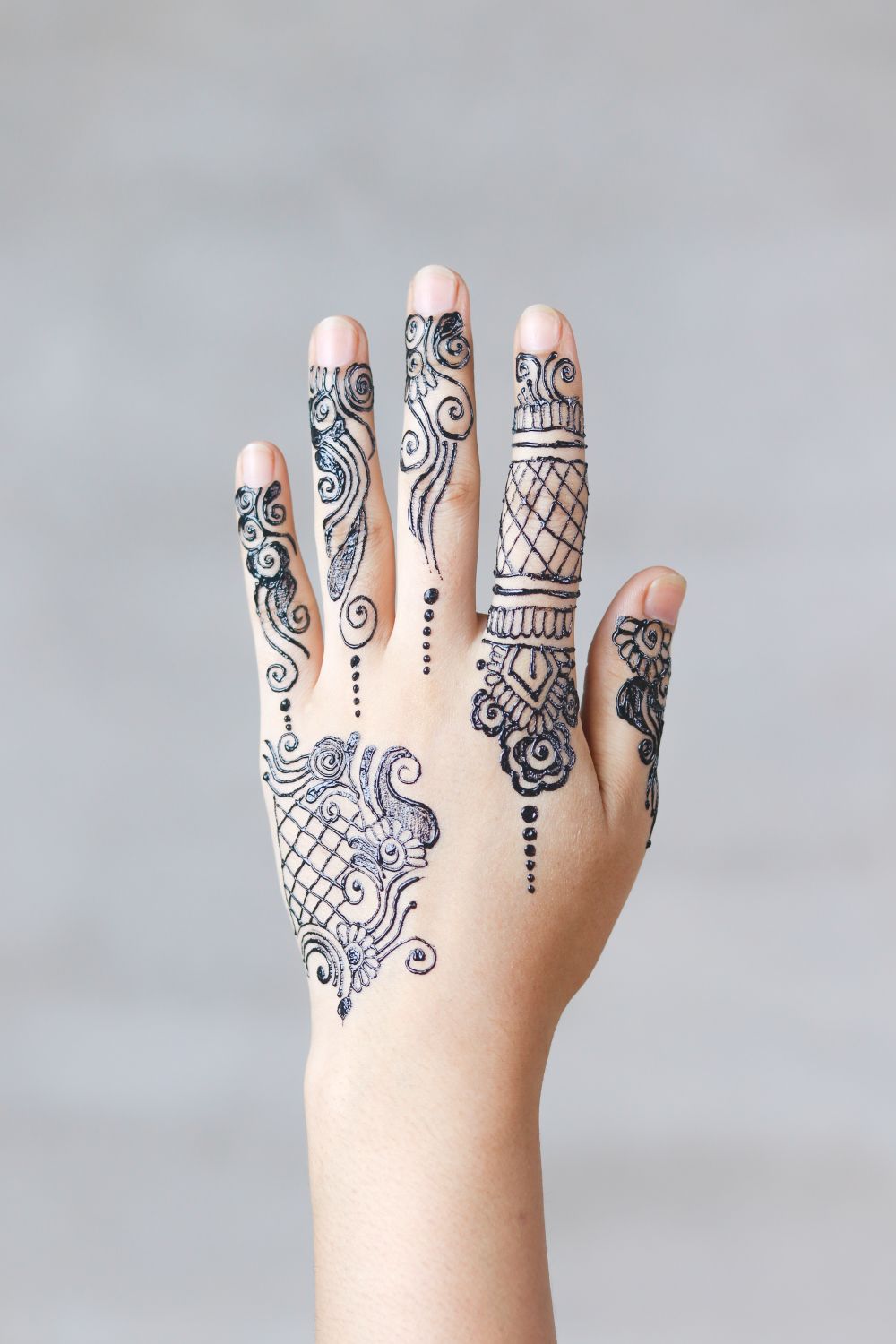
This fusion style combines the dense filling of Indian mehndi with the bold outlines and open spacing of Arabic mehndi. You get the intricacy of Indian patterns without the heaviness, since the design breathes with more negative space.
Indo-Arabic designs are versatile. They work for weddings, festivals, and even semi-formal events. This is often the best choice if you want something detailed but not overwhelming.
Moroccan Mehndi Designs
Moroccan mehndi has a distinctly geometric look. Instead of the flowing curves and florals found in Indian and Arabic styles, Moroccan designs use triangles, diamonds, straight lines, and zig-zag patterns.
These designs have a tribal, minimalist quality and are popular with people who prefer clean, structured patterns over organic shapes. Moroccan mehndi also tends to be simpler and faster to apply.
Contemporary and Western Mehndi
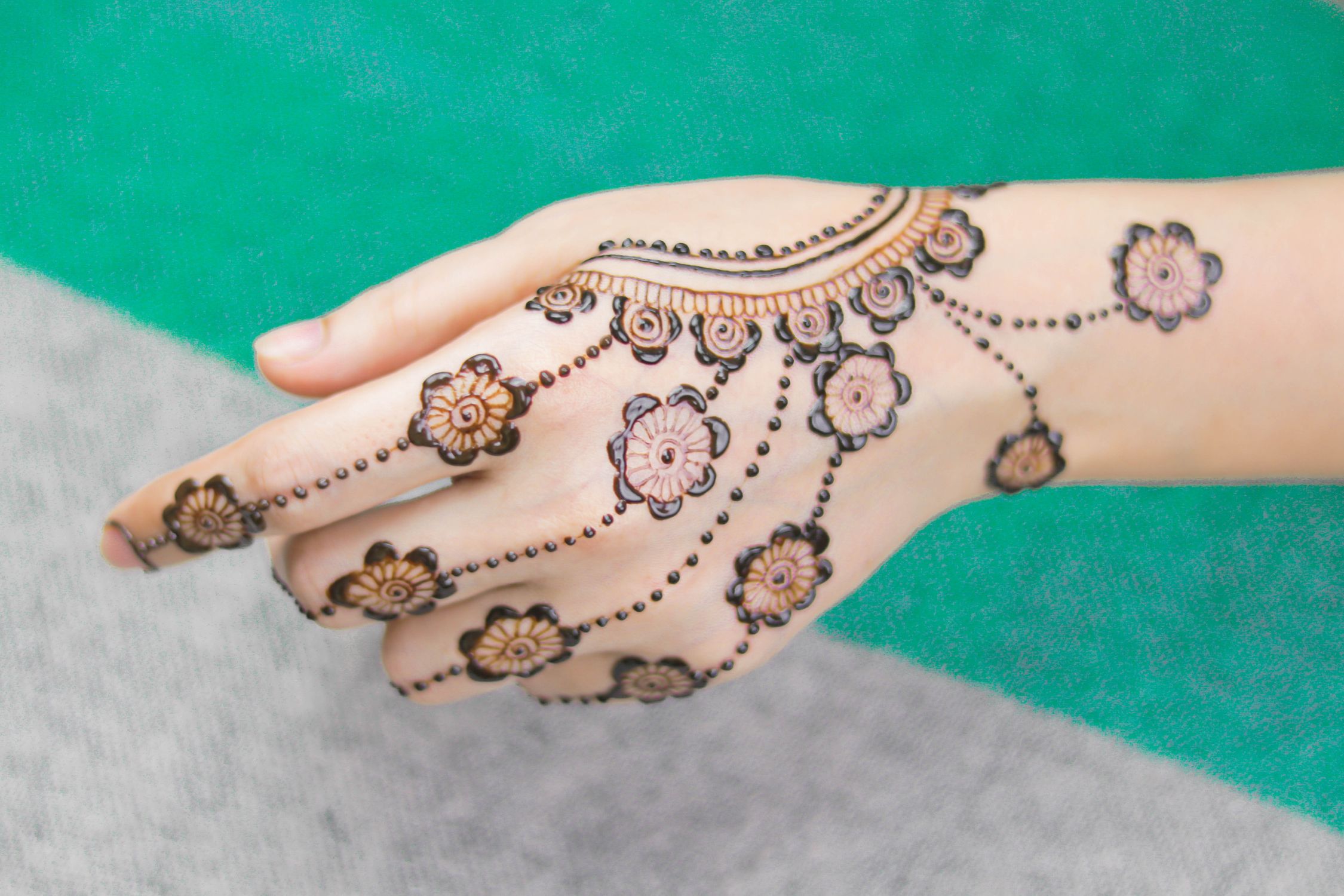
Modern mehndi goes beyond traditional motifs. You will find bracelet-style designs, jewellery patterns that mimic rings and chains, geometric mandalas, and even personalised designs featuring names, dates, or symbols.
Mehndi tattoo designs fall into this category. They appeal to younger audiences and people who want mehndi as a fashion statement rather than for a traditional occasion.
Mehndi Designs by Placement
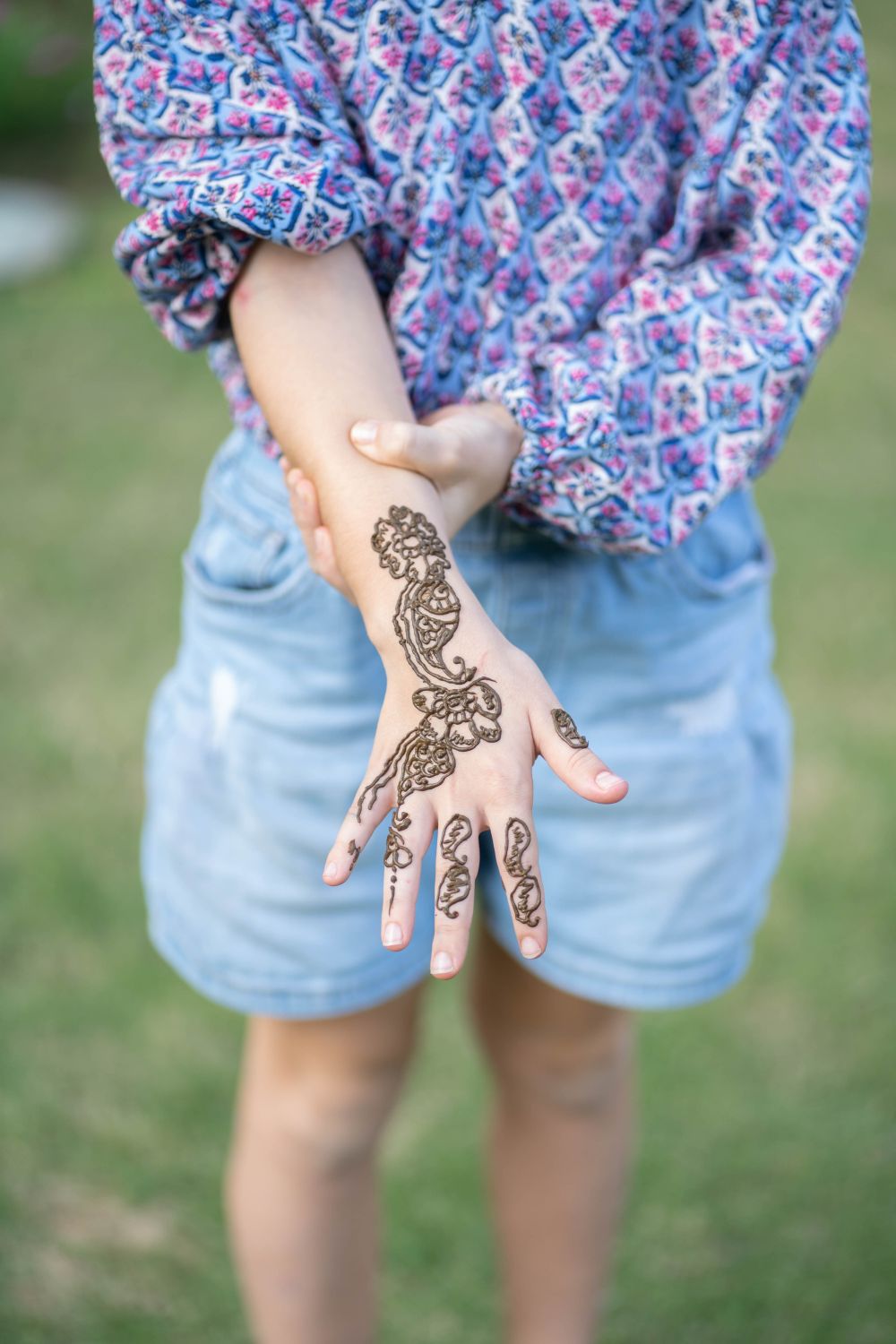
Where you apply mehndi affects which patterns work best. Here is a breakdown by placement.
Front Hand Mehndi
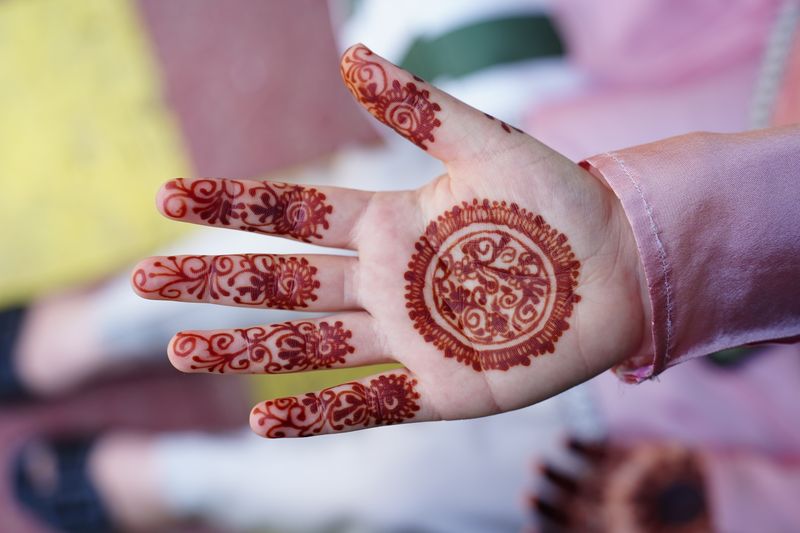
The palm is the most traditional surface for mehndi. Circular mandalas, central motifs, and one-side designs all work beautifully on the front hand. For a flowing look, bel (vine) mehndi patterns run from the wrist through the fingers.
Front hand designs get the darkest colour because the skin on the palm absorbs henna pigment most effectively.
Back Hand Mehndi
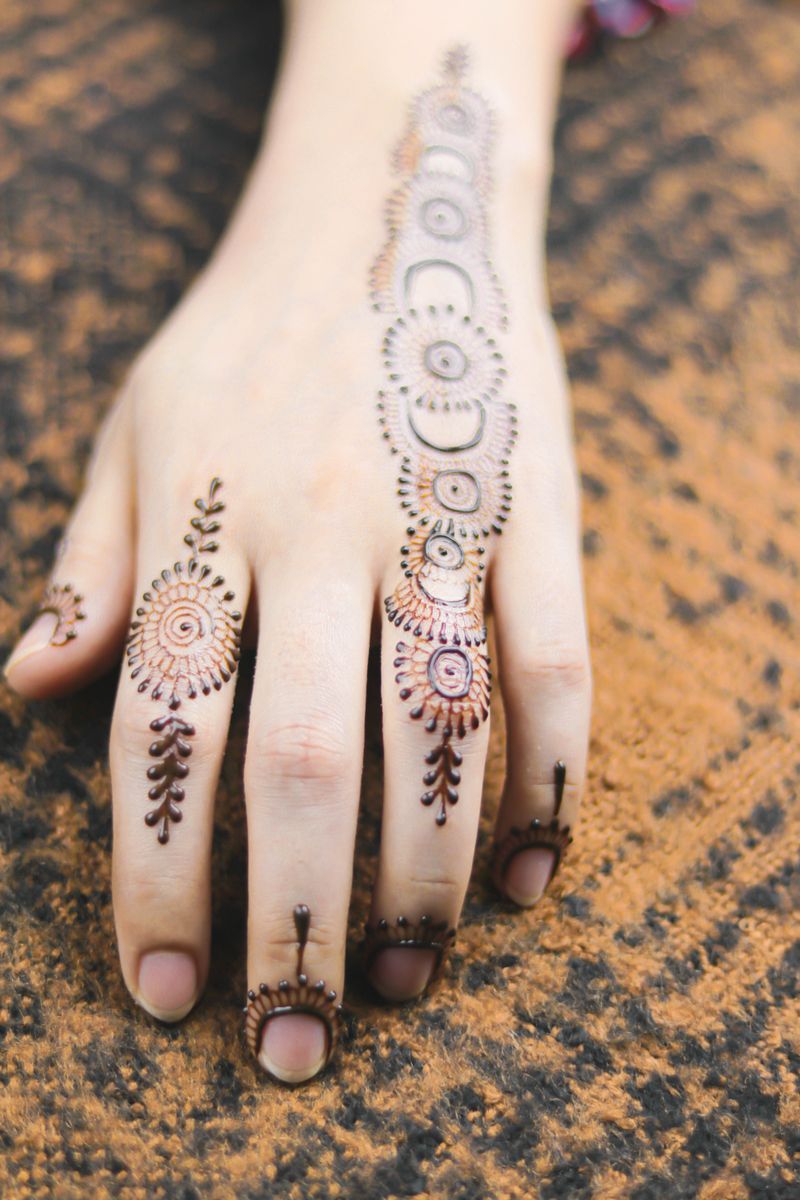
Back hand designs are more visible in daily life and photographs, so many people choose them for their visual impact. Half-hand mehndi designs that cover just the back of the hand and fingers are a popular choice for a balanced look.
Keep in mind that henna colour on the back of the hand is lighter than the palm. Intricate patterns and bold outlines help compensate.
Full Hand Mehndi
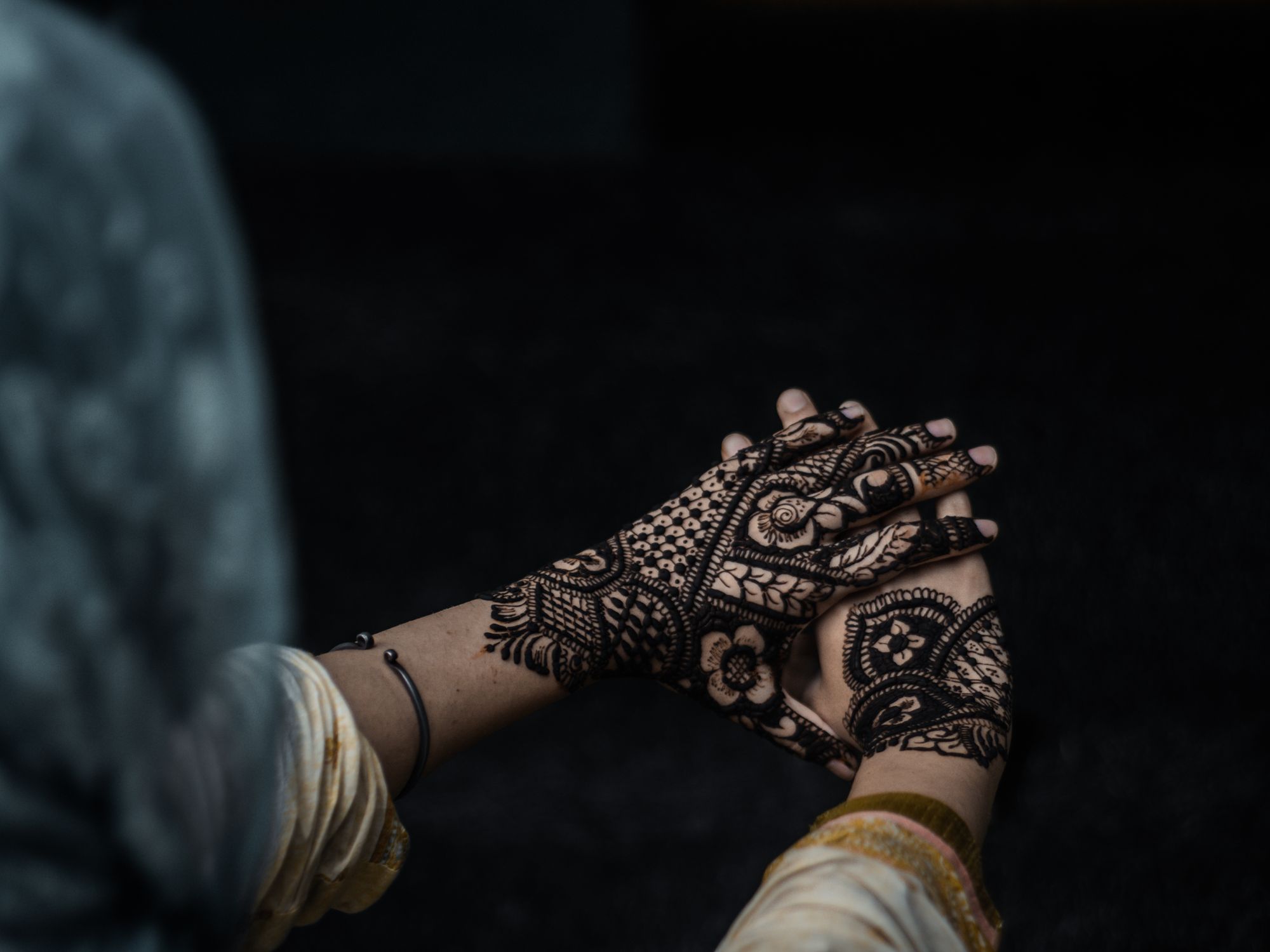
Bridal mehndi typically covers both the front and back of both hands, often extending to the forearm or even the elbow. Full hand designs require an experienced mehndi artist and several hours of work.
The key to a good full-hand design is a cohesive theme. The best artists create a flowing pattern where the front and back hand designs connect through the fingers.
Feet and Leg Mehndi
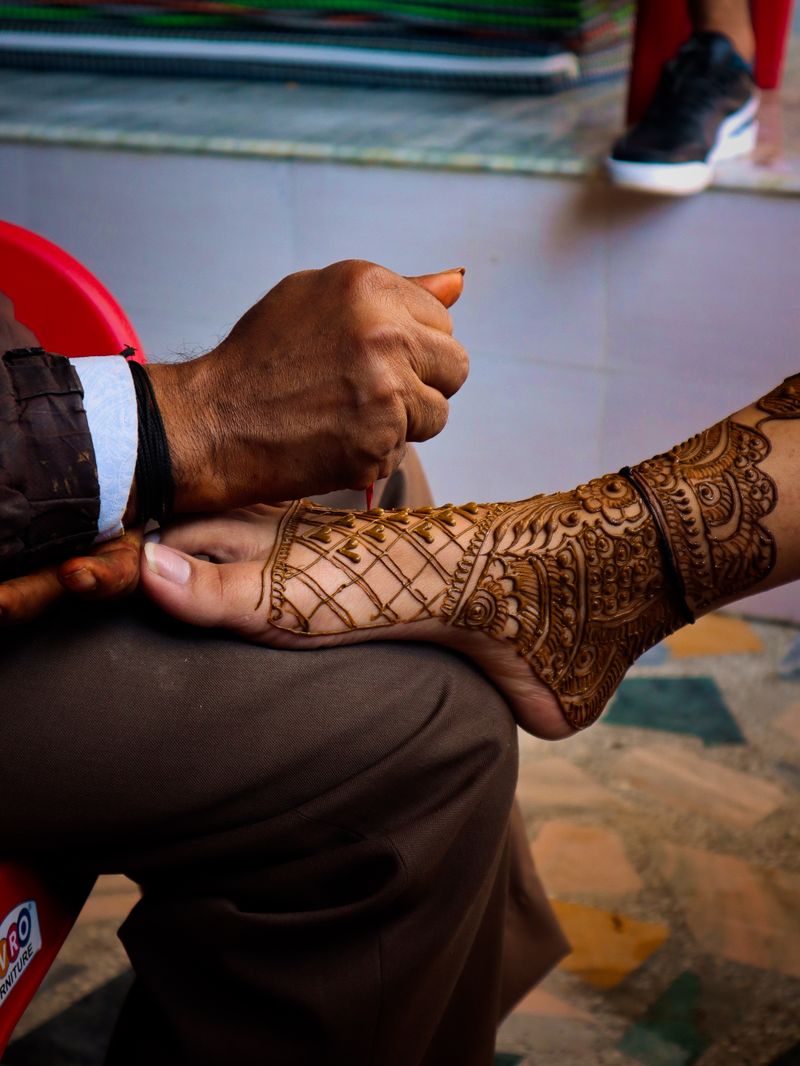
Feet mehndi is traditional for brides and during festivals like Karva Chauth. Designs range from simple toe patterns to elaborate coverage of the entire foot and lower leg.
Circular mandalas on the top of the foot and trailing patterns along the ankle are especially common. The soles of the feet, like the palms, absorb henna well and produce a deep colour.
Finger Mehndi
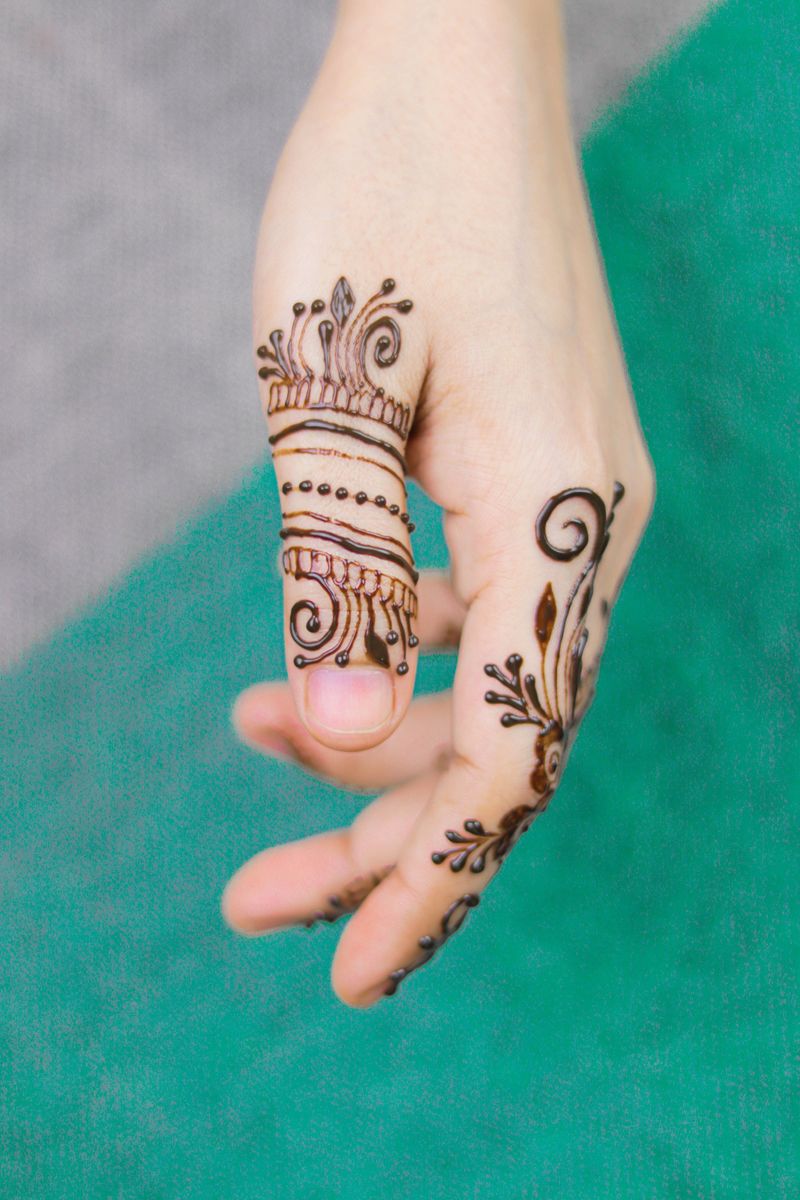
Finger-only designs have become popular for casual occasions. Thin vine patterns, ring-style mehndi around individual fingers, and simple dot work give a subtle but stylish look without the commitment of a full hand design.
Mehndi Designs by Occasion
Bridal Mehndi
Bridal mehndi is the most elaborate form. It traditionally covers both hands (front and back) up to the elbows and both feet up to the mid-calf. Many brides choose designs that tell a story, with hidden groom names, wedding scenes, or symbols of married life woven into the patterns.
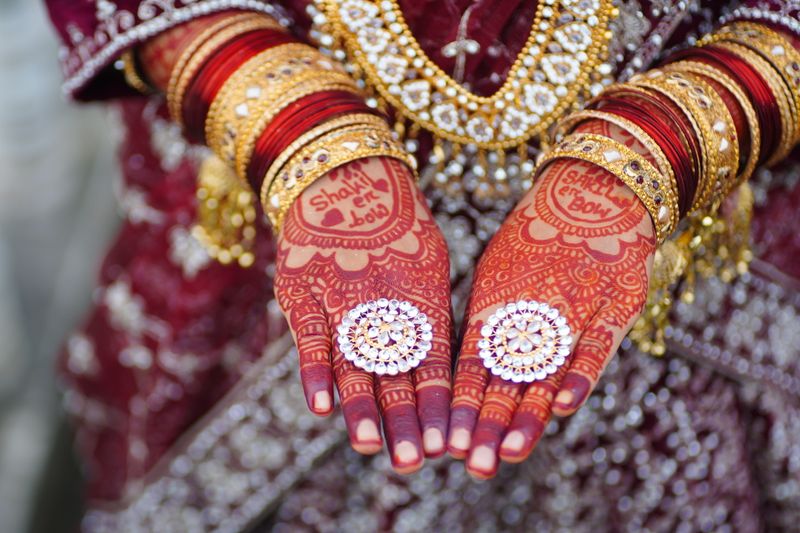
For bridal Arabic mehndi, the coverage is slightly lighter but equally stunning. And it is not just the bride. Groom mehndi designs are a growing trend, typically covering one hand with masculine patterns.
Bridal mehndi sessions usually take 4 to 8 hours and cost between Rs 5,000 and Rs 50,000 depending on the artist, city, and complexity.
Festival Mehndi
Each Indian festival has its own mehndi tradition:
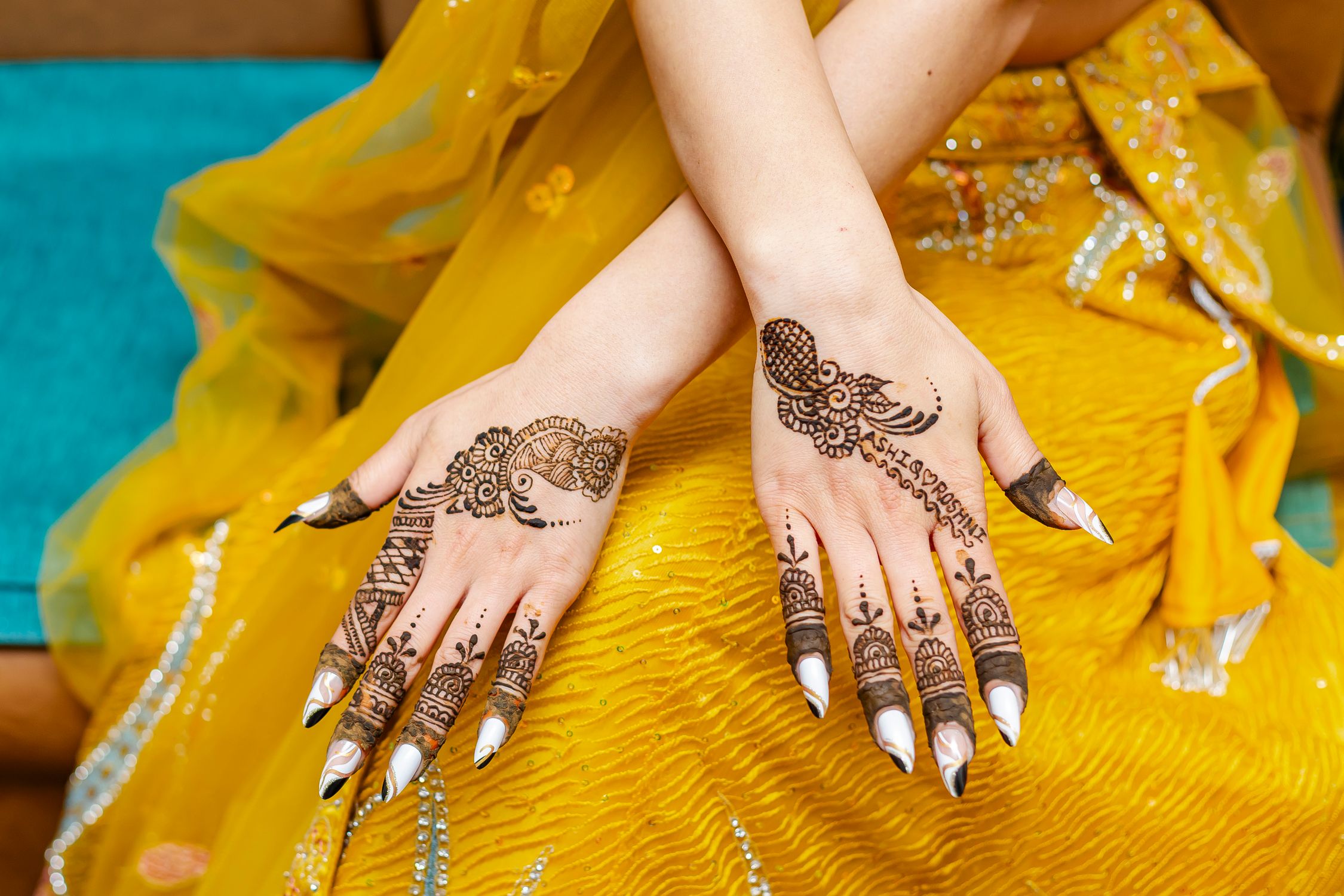
Karva Chauth: Married women apply mehndi as part of the fasting ritual. Karwa Chauth mehndi designs often feature the karva (pot), chhalni (sieve), and moon motifs. Medium coverage on front hands is most common.
Diwali: Rangoli-inspired patterns, diyas, and floral motifs work well for Diwali. Simple to medium coverage is typical.
Janmashtami: Janmashtami mehndi features Radha-Krishna figures, the flute, peacock feathers, and matki (butter pot) motifs.
Raksha Bandhan: Sisters often apply simple Rakhi special mehndi on one hand as part of the celebration.
Eid: Arabic and Pakistani patterns are most popular during Eid celebrations.
Baby Shower and Godh Bharai Mehndi
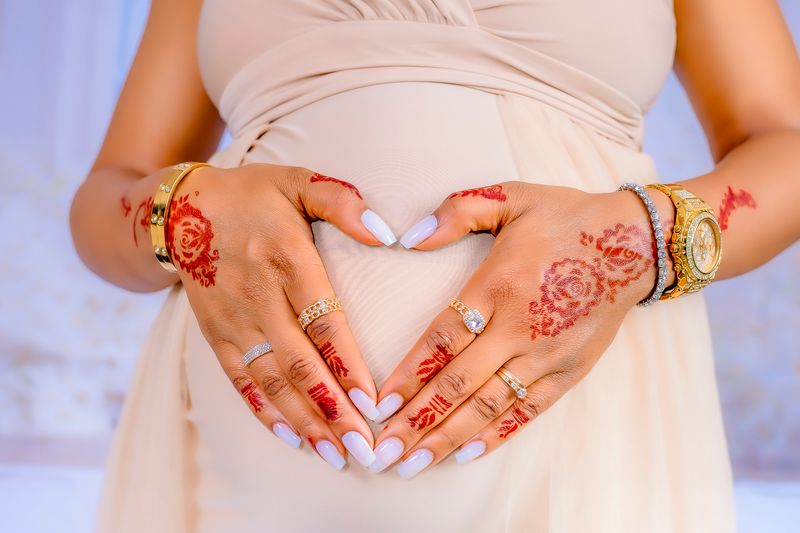
Baby shower mehndi designs are a beautiful tradition in many Indian families. These designs often include baby-related motifs like cradles, tiny footprints, and the mother-child figure. They are typically lighter and more celebratory than bridal mehndi.
Casual and Everyday Mehndi
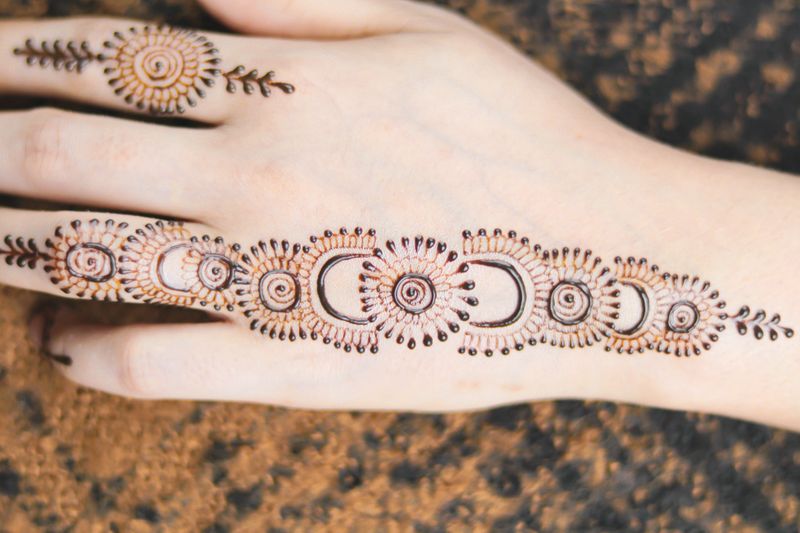
You do not need a special occasion to wear mehndi. Simple finger patterns, a small mandala on the back of the hand, or a minimal vine design can work as everyday style. These take 15 to 30 minutes and use very little henna.
Popular Mehndi Motifs and Patterns
Certain motifs appear across all mehndi styles. Understanding them helps you communicate with your mehndi artist or choose designs that match your taste.
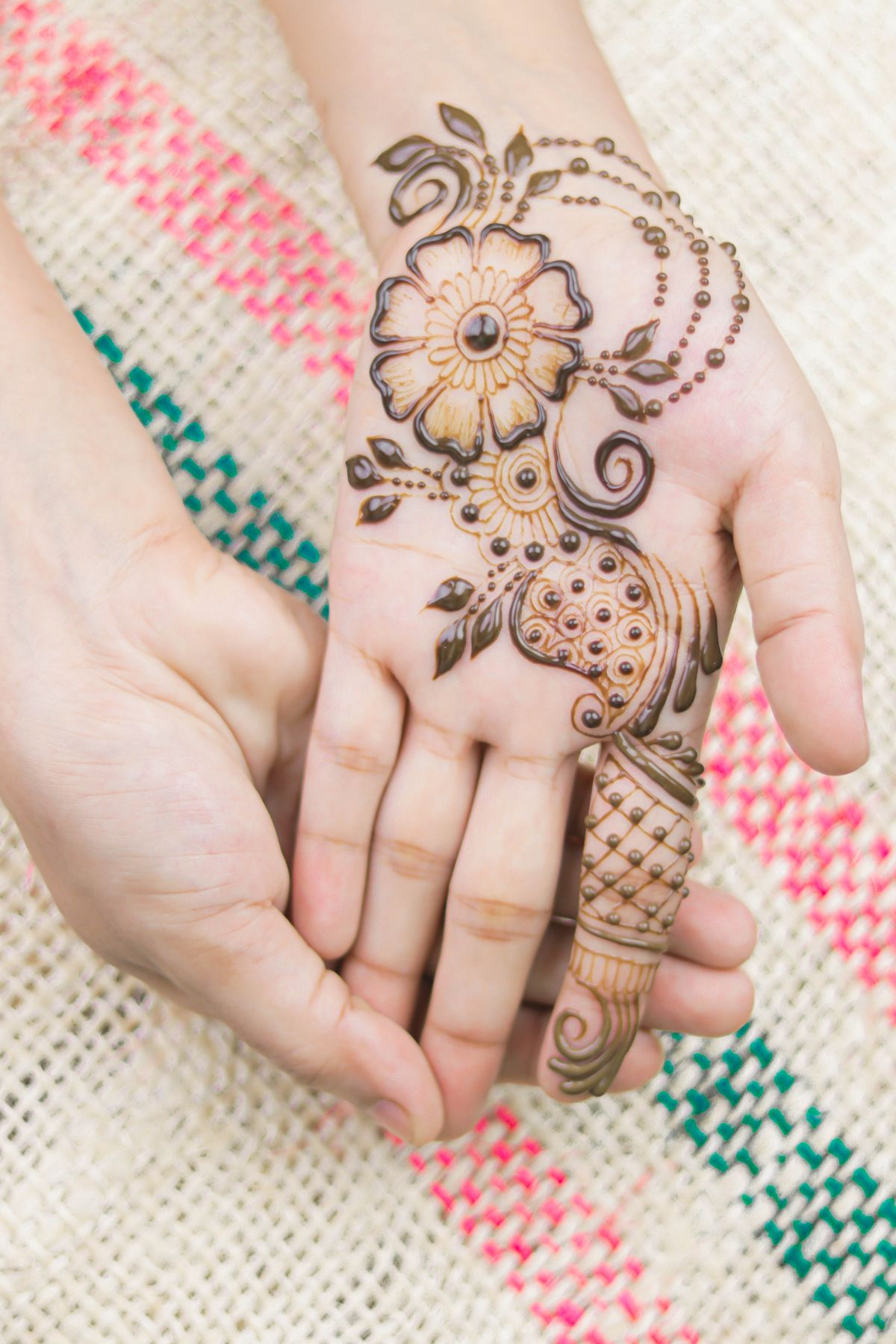
Peacock and Peacock Feather: The national bird of India is one of the most loved mehndi motifs. Peacock bodies work as central motifs, while feathers create elegant trails.
Lotus: Represents purity and beauty. Lotus motifs range from simple four-petal flowers to elaborate multi-layered designs.
Mandala: Circular geometric patterns that radiate outward from a centre point. They work as standalone back-hand designs or as anchoring elements in larger compositions.
Paisley (Mango/Ambi): The teardrop-shaped motif is fundamental to Indian and Arabic mehndi. It can be large and filled or small and repeated as a border element.
Bel (Vine): Flowing vine patterns connect different elements and guide the eye through the design. Bel mehndi designs are especially popular on front hands.
Jaal (Net): A mesh or net pattern that fills spaces between larger motifs. It adds texture and density to Indian-style designs.
Floral: Roses, jasmine, and marigold-inspired flowers appear in every mehndi tradition. They are versatile and suit both simple and elaborate designs.
Simple and Easy Mehndi Designs for Beginners
If you are new to mehndi or want to try applying it yourself at home, start with these approaches:
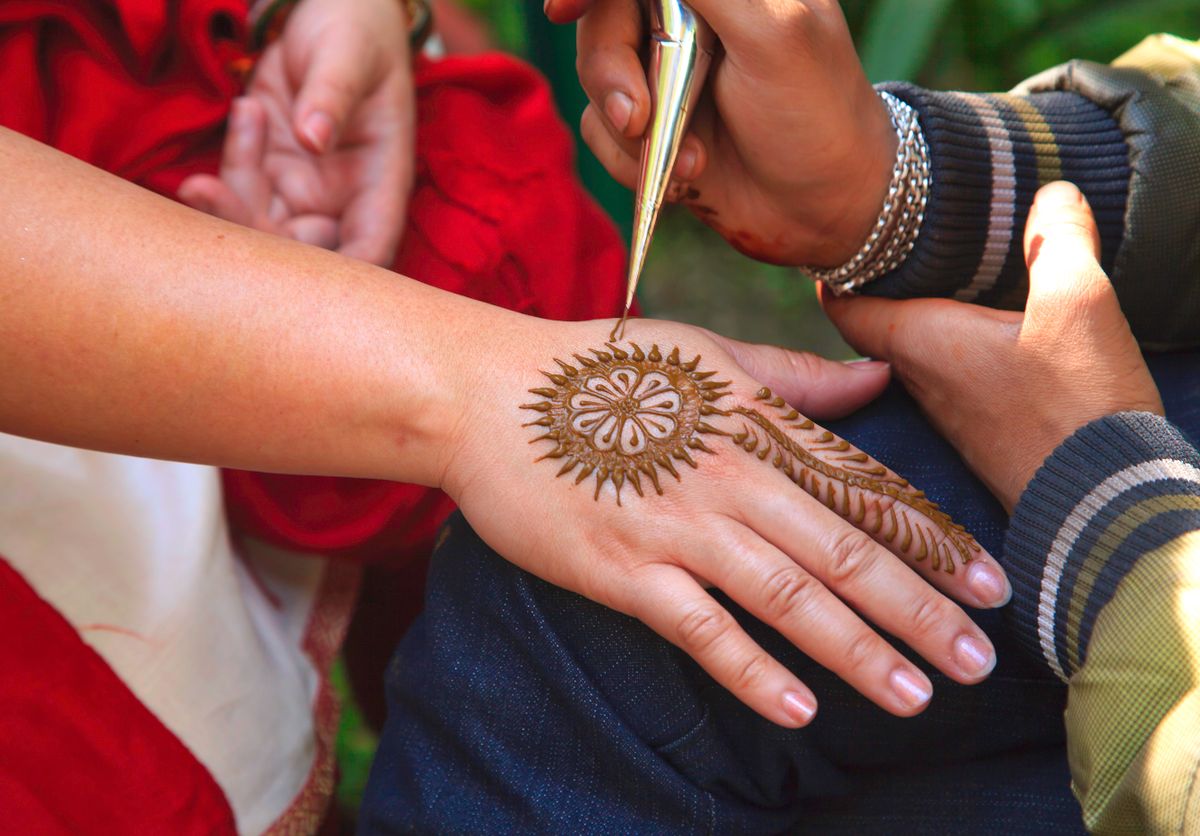
Single-motif designs: Place one mandala, flower, or paisley on the back of your hand. This builds confidence without the pressure of filling an entire hand.
Finger-only patterns: Practice on your fingers first. Simple leaves, dots, and lines along the fingers look good even if slightly uneven.
Arabic trail: A single diagonal floral trail across the palm is forgiving for beginners because the open spacing hides small mistakes.
Dot and line work: Geometric patterns using dots and straight lines require less freehand skill than curved floral designs.
Tip: Use a good quality henna cone with a fine tip. Practice on paper first, then try the back of your non-dominant hand. Keep the cone at a 45-degree angle and squeeze gently for consistent lines.
How to Apply Mehndi at Home
Preparing Your Skin
Wash your hands thoroughly and dry them completely. Remove any oil, lotion, or sunscreen as these create a barrier between henna and skin. Some people apply a thin layer of eucalyptus oil before application, which helps the henna pigment absorb deeper.
Choosing Your Henna
Use natural henna cones made from lawsonia inermis leaves. Good quality henna has a smooth, earthy smell and a deep green-brown colour. Avoid cones labelled “black henna” as they may contain PPD (para-phenylenediamine), a chemical that can cause severe skin reactions.
You can find natural mehndi cones on Amazon from trusted Indian brands like Prem Dulhan, Neha, and Golecha.
Application Tips
Hold the cone like a pen, at a 45-degree angle. Squeeze from the back, not the tip, for even flow. Start from the centre of your design and work outward. Keep a tissue handy to wipe the cone tip if it gets clogged.
For clean lines, rest your hand on a flat surface and move the cone slowly. Speed comes with practice. If you make a mistake while the paste is still wet, use a toothpick to remove it.
Drying Time
Let the mehndi paste dry naturally for at least 2 hours. For best results, keep it on for 6 to 8 hours or overnight. The longer the paste stays on skin, the darker the final colour.
How to Make Mehndi Colour Darker
The colour of your mehndi develops over 24 to 48 hours after removing the paste. Here are proven ways to get a deeper stain:
Keep the paste on longer: Minimum 6 hours, ideally overnight. This is the single most effective step.
Apply lemon-sugar sealant: Mix lemon juice with sugar and dab it on the dried mehndi paste. This keeps the paste moist and in contact with the skin longer.
Use natural heat: Hold your hands near a warm tawa or heater (not too close) after the paste has dried. Heat helps the dye release and penetrate the skin.
Avoid water: Do not wash the area for at least 12 hours after scraping off the paste. Water stops the oxidation process that darkens the colour.
Apply natural oil: After scraping off the dried paste, rub a thin layer of mustard oil, coconut oil, or Vicks VapoRub on the design. This protects the stain and helps it darken further.
Clove steam: Heat a few cloves on a tawa and hold your mehndi-covered hands over the warm smoke for a minute. The warmth and essential oils from cloves help intensify the colour.
Mehndi Aftercare
A fresh mehndi stain lasts 1 to 3 weeks depending on where it is applied and how you care for it. Here is how to make it last:
Scrape, do not wash: When you are ready to remove the dried paste, gently scrape or peel it off. Do not wash it off with water.
Avoid soap and chemicals: For the first 24 hours, avoid washing the area with soap, hand sanitiser, or cleaning products. These strip the top layer of skin and fade the colour.
Moisturise carefully: After the first day, applying coconut oil or olive oil helps seal the colour. Avoid petroleum-based products directly on fresh mehndi.
Chlorine and salt water: Swimming pools and sea water fade mehndi quickly. Avoid them if you want your design to last.
Exfoliation speeds fading: Scrubbing, using a loofah, or applying exfoliating products on the mehndi area will fade the design faster.
How to Remove Mehndi
If you need to remove mehndi before it fades naturally:
Soak the area in warm salt water for 15 to 20 minutes, then gently scrub with a loofah or exfoliating scrub. Baking soda paste (mixed with lemon juice) applied for 10 minutes before washing can also help lighten the stain.
Keep in mind that mehndi is a surface stain. It will fade with the natural shedding of skin cells over 1 to 3 weeks regardless of what you do.
Choosing the Right Mehndi Design
Picking a design can feel overwhelming with so many options. Use these filters to narrow it down:
Occasion: Weddings call for elaborate coverage. Festivals suit medium patterns. Casual events work with simple, minimal designs.
Time available: Full bridal mehndi takes 4 to 8 hours. A festival design takes 1 to 2 hours. Simple designs take 15 to 30 minutes.
Your skill level: If you are applying it yourself, choose Arabic or simple Indian patterns. Leave dense, full-hand designs to professional artists.
Your outfit: Heavy ethnic wear (lehenga, saree) pairs well with detailed mehndi. Western or Indo-western outfits look better with minimal, modern patterns.
Skin tone: Mehndi appears darker on warmer skin tones. If you want to experiment with colour, red mehndi designs offer a vibrant alternative to traditional brown henna. If you have a lighter complexion, choose designs with bold outlines and filled sections for more contrast.
Frequently Asked Questions
How long does mehndi take to dry?
Mehndi paste takes about 30 minutes to 1 hour to feel dry to the touch. However, for the best colour, keep the dried paste on your skin for 6 to 8 hours.
Why did my mehndi not turn dark?
Common reasons include removing the paste too soon, washing with water immediately after, using old or low-quality henna, or applying mehndi on oily or lotioned skin. Body temperature, climate, and the specific area of skin also affect colour depth.
Is mehndi safe during pregnancy?
Natural henna made from lawsonia inermis is generally considered safe during pregnancy. However, avoid “black henna” products as they contain chemicals that may cause skin reactions. If you have sensitive skin, do a patch test on a small area first and consult your doctor if you have concerns.
Can men wear mehndi?
Yes. Groom mehndi is a growing tradition in Indian weddings. Many men also wear simple mehndi on one hand during festivals and celebrations.
What is the difference between mehndi and henna?
Mehndi and henna refer to the same thing. “Henna” comes from the Arabic word for the plant (lawsonia inermis), while “mehndi” is the Hindi/Urdu word. In India and Pakistan, the art and the paste are both called mehndi. In the West, “henna” is more commonly used.
How much does a mehndi artist charge?
Rates vary widely. For a simple design on both hands, expect Rs 500 to Rs 2,000. Festival-level designs cost Rs 1,000 to Rs 5,000. Bridal mehndi ranges from Rs 5,000 to Rs 50,000 depending on the artist’s reputation, city, and design complexity. Always check the artist’s portfolio and reviews before booking.


